Forestry Mulching vs. Land Clearing on Hilly Acres
Got a hilly, overgrown acre you want to turn into grass? We explain forestry mulching vs. traditional land clearing, plus smart options for dealing with stumps.
Clearing a Hilly, Overgrown Acreage: Where Do You Start?
We recently got a call from a homeowner — let's call her Kelly — over in Ashford. She and her husband had about two acres that were, in her words, “pretty hilly, full of leaves, sticks, and everything that's fallen and overgrown.” The land runs more like a football field in length than width, and it gets steeper the farther back you go.
Their goal was simple: clear it out and eventually get grass growing. She'd heard of forestry mulching, was wondering how it compares to traditional land clearing, and her husband was asking about stump grinding too.
We walk people through this same decision all the time, so we figured we'd share what we told Kelly — especially if you're staring at a hilly, overgrown property and not sure where to begin.
Forestry Mulching vs. Traditional Land Clearing
On the phone, our first question to Kelly was whether the hill was just gently rolling or actually steep in sections. That matters because equipment choices — and even which method is safest — change on a slope.
From there, we talked through the two main options:
What Forestry Mulching Does Best
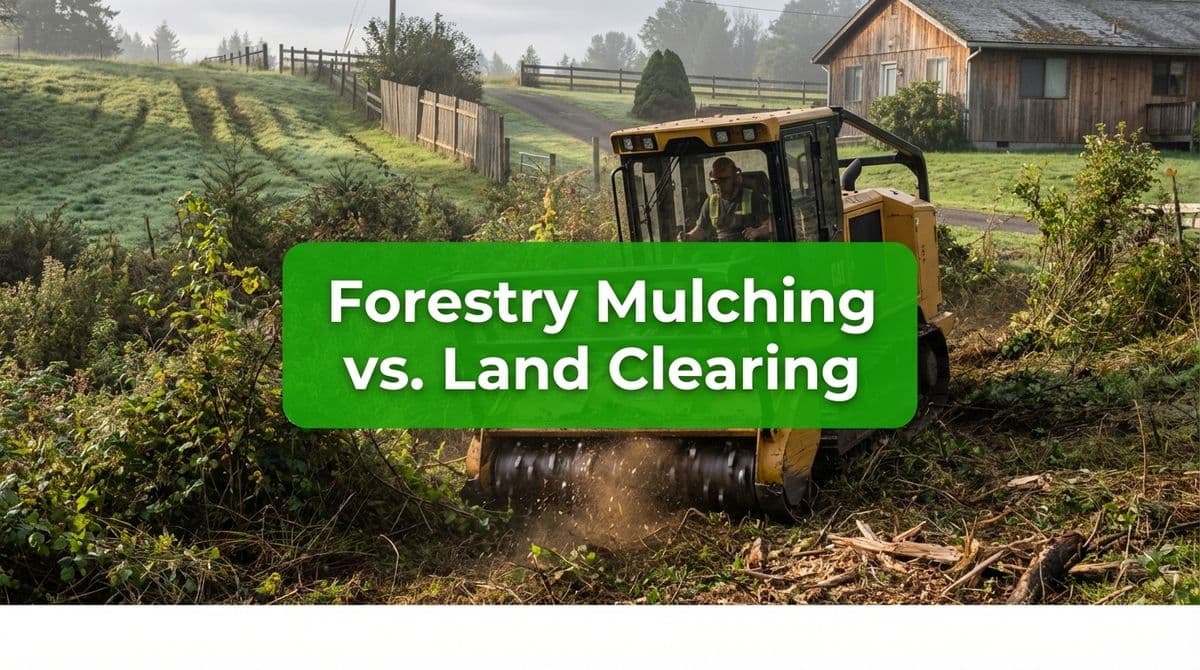
Forestry mulching uses a specialized machine with a spinning drum to grind small trees, brush, and undergrowth into mulch right on the spot. For properties like Kelly's, it's often our first recommendation.
Big advantages for hilly, overgrown land:
- Great on slopes: The right machine can safely work on hills without tearing the soil up like a dozer blade would.
- Leaves roots in place: You keep root systems in the ground, which helps prevent erosion on steep sections.
- Instant mulch layer: All those shredded trees and briars become a natural mulch that helps suppress weeds and hold moisture for future grass.
- Typically less invasive: No massive brush piles or big ruts to fix afterward.
For Kelly's football-field-shaped slope, mulching lets us thin and clear the area while still respecting how water runs down the hill.
When Traditional Land Clearing Makes More Sense
Traditional land clearing usually means a dozer, excavator, or skid steer pushing trees over, grubbing roots, and hauling or burning debris. It can create a very “clean slate,” but it's more aggressive.
We lean toward traditional clearing when:
- You need large trees and stumps completely removed for building pads, driveways, or foundations.
- The ground is relatively flat, so erosion is less of a concern.
- You're prepared for more grading and finish work afterward.
On a steep, narrow property like Kelly's, completely stripping the soil can create runoff problems and make it harder to establish grass, so we usually recommend a more selective approach.
What About All Those Stumps?
One of Kelly's questions was whether we could handle stump grinding too. We explained that forestry mulching doesn't remove stumps; it takes down everything above ground. The stumps stay at or just above soil level.
You've basically got three options for dealing with stumps:
- Leave them in place: Fine if you're keeping it as a natural area or won't be mowing tight.
- Grind the stumps: A stump grinder chews them below grade so you can mow or plant grass right over the top.
- Excavate the stumps: Best when you need to build or pour concrete, but it's more disruptive.
In Kelly's case, we recommended forestry mulching first to open everything up, then bringing in a trusted stump grinding partner to take out the stumps in the areas where they knew they wanted smoother, mowable lawn.
Preparing a Hilly Acreage for Grass
Once the land is mulched and any priority stumps are handled, you can start thinking seriously about grass. On a slope, the goal is to protect the soil while you get something growing.
Here's the basic sequence we often walk customers through:
- Light grading, not scraping: We smooth ruts and high spots without peeling off all the topsoil.
- Keep some mulch: That wood mulch from the mulcher is valuable. We usually thin or push it aside in seed zones, not remove it completely.
- Choose the right grass seed: In our area, a mix like fescue for shade/slope or Bermuda for sunnier, flatter sections can work well. Local conditions matter.
- Seed and cover: Broadcast seed, then cover with straw or erosion-control blankets on steeper stretches to keep rain from washing everything downhill.
- Plan to overseed: The first season is about coverage, not perfection. Expect to overseed bare spots.
How We Estimate a Project Like This
On the call with Kelly, we explained that we really needed to see the property to give a fair price. For hilly acreage, cost depends on:
- How steep the slopes actually are.
- Density and size of trees and brush.
- Accessibility for equipment (gate width, tight turns, low limbs).
- Whether we're just mulching, or also coordinating stump grinding and light grading.
That's why we set up an on-site visit when both Kelly and her husband were available. Walking the property together lets us talk through which areas should be fully cleared, which can stay more natural, and what “ready for grass” really means to them.
Not Sure Which Route to Take? Here's Our Typical Recommendation
For most homeowners with a hilly, overgrown acre or two who want grass one day, we usually recommend:
- Forestry mulching to open the land up, keep roots for erosion control, and create a mulch layer.
- Targeted stump grinding where you want smoother, mowable yard areas.
- Selective grading and seeding with erosion control in mind.
If you're staring at your own “football field” of brush and hills and wondering where to start, we're happy to walk it with you, talk through your plans, and help you decide whether forestry mulching, traditional clearing, or a mix of both is the right fit for your property.